

Regardless of method applied, the journal entry for depreciation will include a debit to depreciation expense and credit to accumulated depreciation to be used in the calculation of net fixed assets. Net fixed assets are the metric measuring the value of an entity’s fixed assets. In other words, it’s the total carrying value of all equipment, buildings, vehicles, machinery, and other fixed assets. Apart from being used to help a business generate revenue, they are closely looked at by investors when deciding whether to invest in a company. For example, the fixed asset turnover ratio is used to determine the efficiency of fixed assets in generating sales. Because they provide long-term income, these assets are expensed differently than other items.
- Meanwhile, the International Financial Reporting Standards (IFRS)—the international counterpart of the US GAAP—allows revaluation accounting.
- It’s often used when comparing more than one company as a potential investment.
- Effective and regular asset accounting means you know the true value of your fixed assets, helping prevent losses.
- The majority of fixed assets are purchased outright, but entities sometimes borrow funds to purchase fixed assets or pay to use a piece of property or equipment over a period of time.
- The asset’s cost is $20,000 and the salvage value is $4,000 which calculates to a depreciable base of $16,000.
- When you’re ready to streamline your financial reporting, including documenting your fixed assets, consider QuickBooks.
- The purchase of fixed assets represents a cash outflow (negative) to the company while a sale is a cash inflow (positive).
A fixed asset is property with a useful life greater than one reporting period, and which exceeds an entity’s minimum capitalization limit. A fixed asset is not purchased with the intent of immediate resale, but rather for productive use within the entity. Also, it is not expected to be fully consumed within one year of its purchase. A fixed asset appears in the accounting records at its net book value, which is its original cost, minus accumulated depreciation, minus any impairment charges. Because of ongoing depreciation, the net book value of an asset is always declining.
Current assets vs. long term assets
Capitalized costs consist of the fees that are paid to third parties to purchase and/or develop software. Capitalized costs also include fees for the installation of hardware and testing, including any parallel processing phase. Costs to develop or purchase software that allows for the conversion of old data are also capitalized. The are two main sets of accounting standards that most businesses follow. One is GAAP and the other is IFRS (International Financial Reporting Standards).
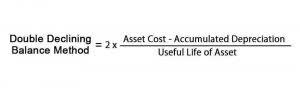
For this reason, the IFRS encourages companies to acquire a set of authorized accounting directives. It’s the amount the company expects to receive from the sale or disposal of the asset after its usefulness diminishes. There can be different depreciation or cost allocation methods, including the straight-line and reducing balance methods. Hence, related expenses of the assets need to be aligned with the periods of economic benefit.
Customs & duties management
These assets are not expected to be sold or used within a year and are sometimes recorded on the balance sheet as property, plant, and equipment (PP&E). Fixed assets are subject to depreciation, which accounts for their loss in value over time, whereas intangible assets are amortized. Fixed assets are often contrasted with current assets, which are expected to be converted to cash or used within a year. Understanding fixed asset accounting is fundamental for businesses to effectively manage their long-term tangible and intangible assets. It involves evaluating asset valuation methods, depreciation, and lifecycle management, influencing financial statements and overall company performance.
- Fixed assets accounting is knowing how to account for investments while understanding what counts as a capitalized cost.
- Netbook value is obtained when we deduct the accumulated depreciation from the asset’s cost.
- Fixed assets are often contrasted with current assets, which are expected to be converted to cash or used within a year.
- These can either be movable items, such as desks, or utilities affixed to buildings, such as lights.
Moreover, they must be diligent when capturing important data relating to these assets. Success in maintaining reliable accounting reports can help firms exercise robust preventative maintenance, improve productivity, and deter theft. Once you receive the carrying amount, you have to compare it with the recoverable amount.
Journal Entry for Purchase of a Fixed Asset
Depreciation is the process of allocating the cost of the asset to operations over the estimated useful life of the asset. For financial reporting purposes, the useful life is an asset’s service life, which may differ from its physical life. An asset’s estimated useful life for financial reporting purposes may also be different than its depreciable life for tax reporting purposes. If the car is being used in a company’s operations to generate income, such as a delivery vehicle, it may be considered a fixed asset. However, if the car is being used for personal use, it would not be considered a fixed asset and would not be recorded on the company’s balance sheet. Fixed assets are particularly important to capital-intensive industries, such as manufacturing, which require large investments in PP&E.
Tax depreciation is commonly calculated differently than depreciation for financial reporting. The fixed asset turnover ratio determines a company’s efficiency in generating sales from existing fixed assets. A higher ratio means fixed assets are being used more adequately than a lower ratio. The fixed asset turnover ratio is best fixed asset accounting analyzed alongside profitability as it does not represent anything related to the company’s ability to generate profits or cash flows. In accounting, a fixed asset, also known as a capital asset or tangible asset, is a tangible long-lived piece of property or equipment a company plans to use over time to help generate income.
Asset Valuation Methods and Depreciation
If the netbooks value is higher than the sale proceeds, it’s a loss and vice versa. It means we do not modify the cost of the asset purchased, but we keep posting in contra account. Further, it helps track how much asset has been consumed by the business and align the expense against the assets and economic benefits. On the other hand, if the business purchases an asset amounting to $5,000, it needs to be capitalized. While straight-line depreciation is the method most commonly used, other methods such as units of production, sum of the year’s digits, and declining balance exist.
- Also, it is not expected to be fully consumed within one year of its purchase.
- A single error in financial reports can lead to grave consequences – potentially damaging company integrity.
- Instead, a fixed asset is used to produce the goods that a company then sells to obtain revenue.
- It was thought that shady financial reporting practices by some publicly-traded entities caused (or partly caused) the financial calamities.
- For example, a company that purchases a printer for $1,000 with a useful life of 10 years and a $0 residual value would record a depreciation of $100 on its income statement annually.